



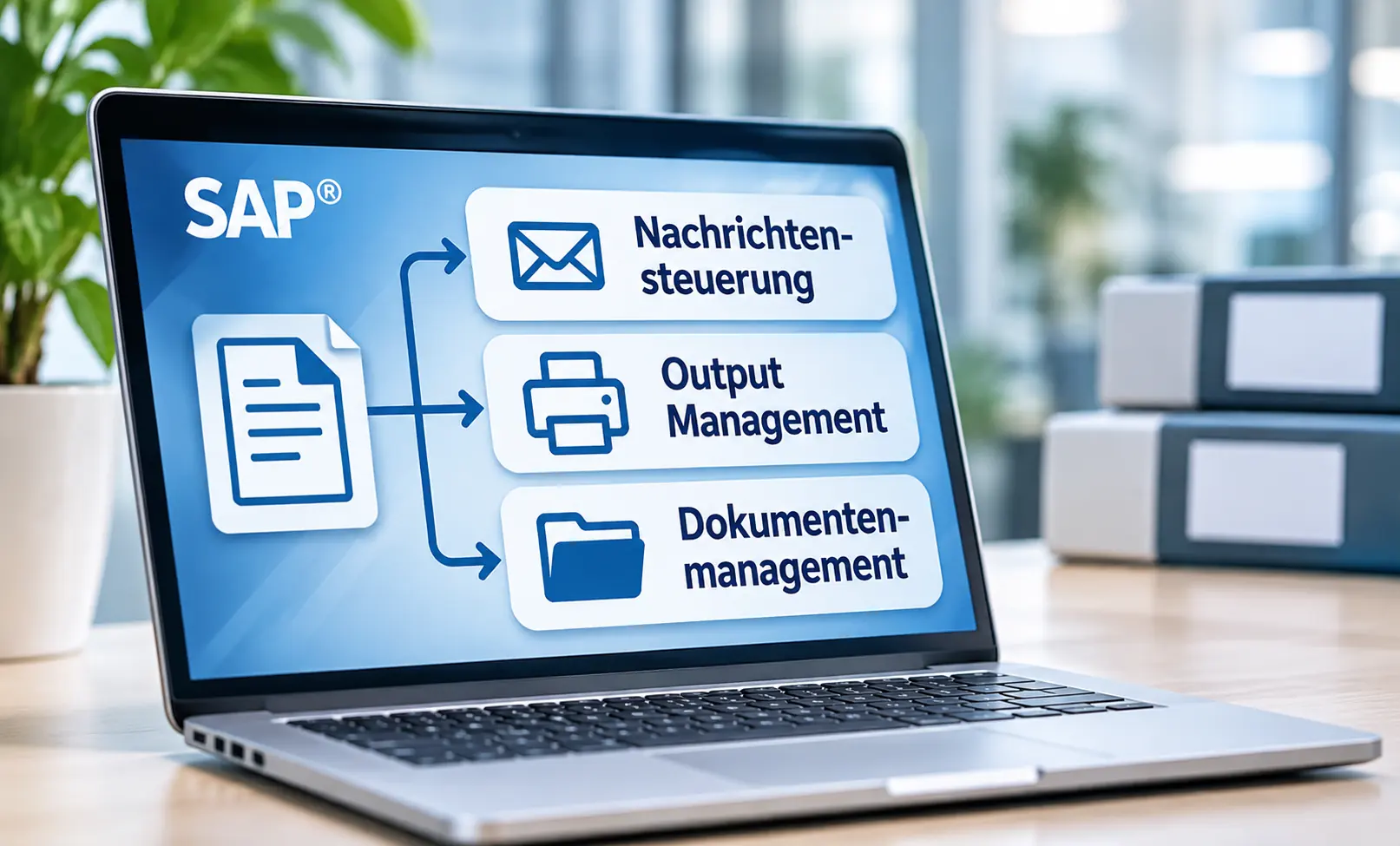
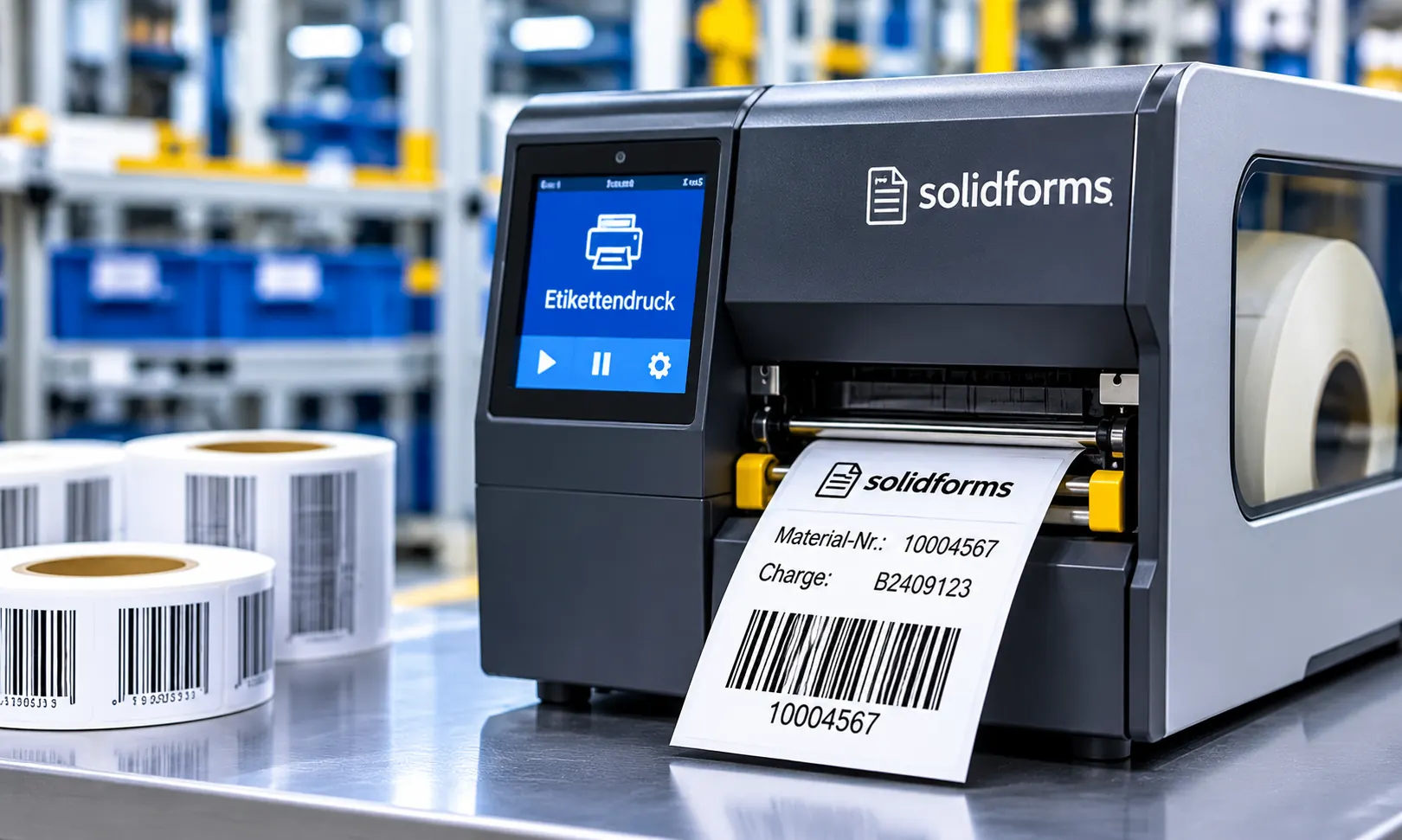



NAST or S/4HANA Output Management? Although SAP® provides a modern approach to document output with S/4HANA Output Management, many projects continue to use classic output determination. This is not necessarily a step backwards. Both approaches have their strengths—and in practice, the differences become particularly apparent when forms need custom processing, reprinting or email delivery.
Our project experience at solidforms shows that the choice of output technology should not be based solely on which solution is newer. What matters is the SAP® application in use, business requirements, extensibility and long-term maintainability.
Why is classic output determination still being used?
Classic SAP® output determination has been established in many companies for years. Consultants and developers are familiar with output types, the condition technique, transaction NACE, processing programs and form integration. Existing processes have been tested extensively, and customer-specific enhancements can be maintained within familiar structures.
In supported applications, S/4HANA Output Management follows a different concept: output parameters such as recipients, channels and form templates are determined using Output Parameter Determination, which can involve BRF+-based rules. For teams primarily experienced with NAST, this requires a change in both technical approach and working methods.
In our experience, project teams therefore often choose the familiar classic output determination approach, particularly where extensive customer-specific requirements have already been implemented. Another consideration is that support for each approach varies by SAP® application, release and deployment model. Not every process offers a free choice between NAST and the newer Output Management framework.
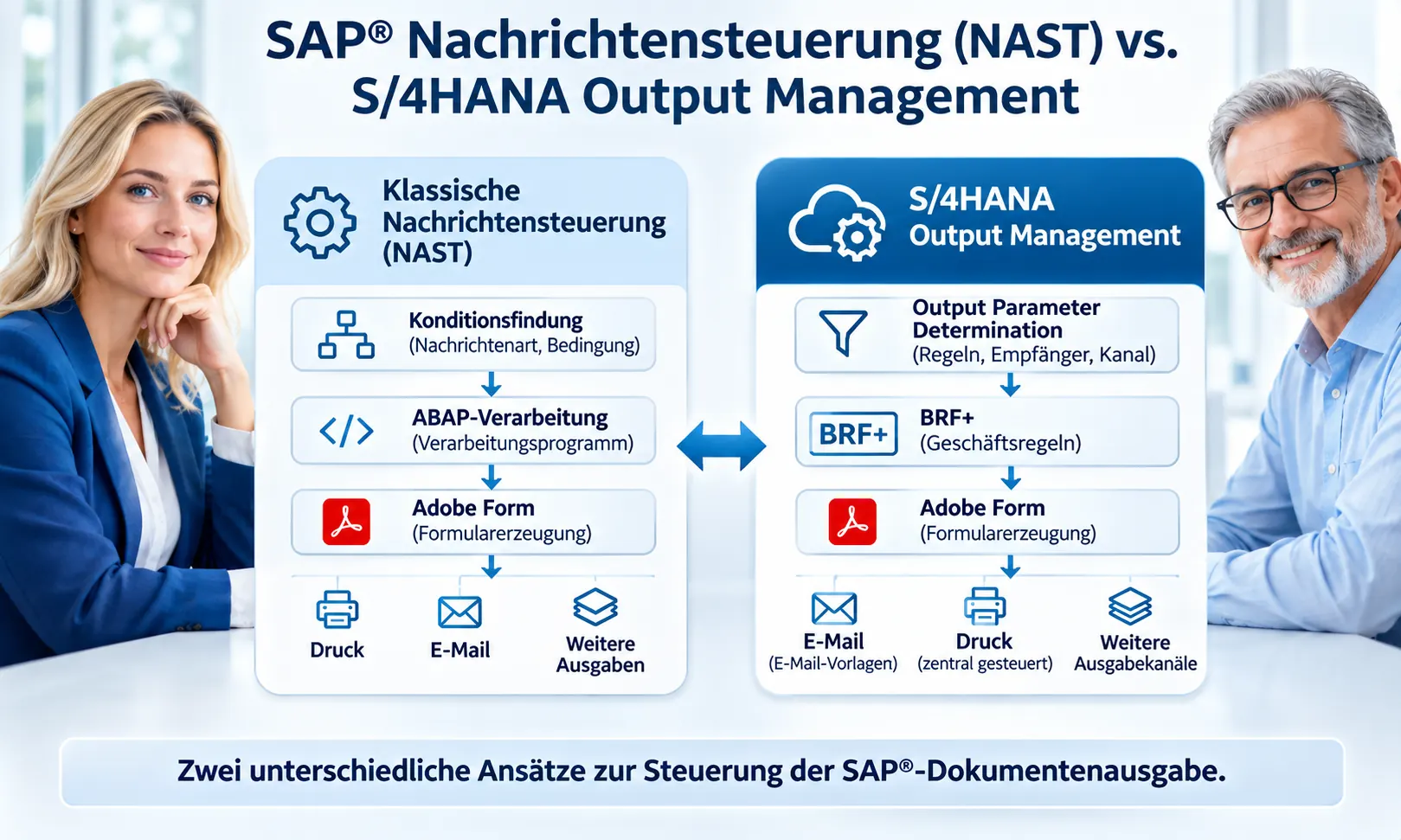
Classic output determination versus S/4HANA Output Management
Neither approach is universally “better” or “worse.” The following overview highlights typical differences from a forms-development perspective. The details depend on the application and its available enhancement options.
| Requirement | Classic output determination (NAST) | S/4HANA Output Management |
|---|---|---|
| Output determination | Condition technique and output types | Output Parameter Determination, with BRF+ rules depending on the application |
| Custom processing | Custom processing programs and established ABAP enhancements | Enhancements through the interfaces and extension points provided by each application |
| Reprinting | Often readily controlled through existing processing logic | Options and user interaction depend more heavily on the specific output scenario |
| Email delivery | Complex requirements often call for additional development | Integrated recipient determination and email templates in supported scenarios |
| Form integration | Established integration options, including Adobe Forms | Adobe Forms-based output in supported applications |
Reprinting and custom development: Why NAST often feels more flexible
In practice, simply generating a form is rarely enough. Companies may need targeted reprints, special selection options, additional checks or the output of several related documents.
With classic output determination, such requirements can often be implemented directly in a custom ABAP processing program. Developers can control data retrieval, form processing and additional steps. Users are also familiar with existing ways of triggering output again.
In S/4HANA Output Management, processing is more tightly defined by the relevant application framework. Custom logic must use the extension options provided for that scenario. This can be beneficial for standardized processes, but may require more design effort when special requirements arise.
Our experience: Especially for complex reprinting scenarios or heavily customized output processes, it is worth checking early whether the required functionality is actually supported by the intended Output Management scenario. This helps avoid unpleasant surprises during implementation.
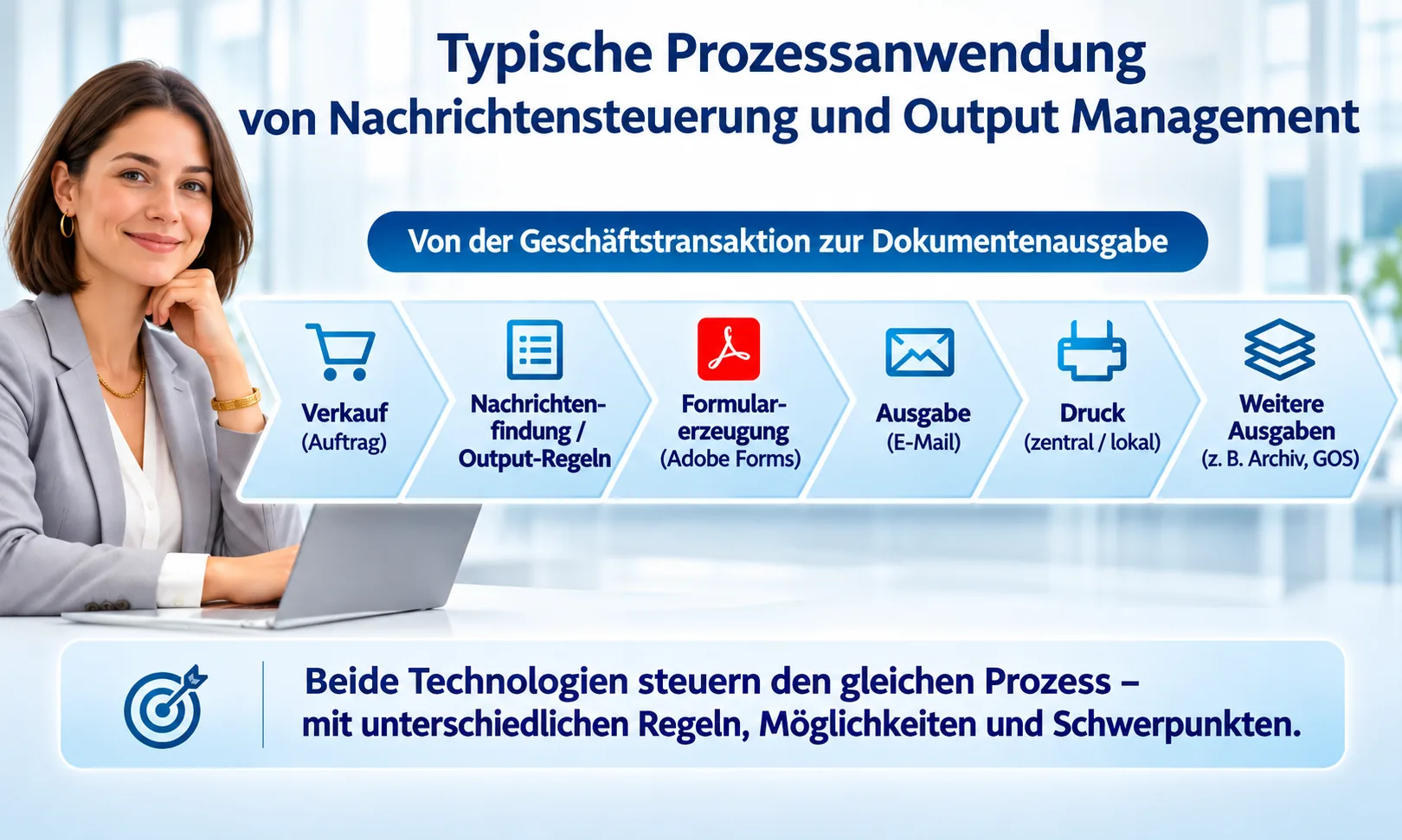
Email delivery: Where S/4HANA Output Management shows its strengths
Electronic delivery of business documents reveals a different side of the comparison. In supported S/4HANA Output Management scenarios, recipients, output channels, email templates and other output parameters can be determined using rules.
This is a major advantage when order confirmations, invoices or purchase orders must be sent automatically to different contacts. An appropriate subject line and personalized message are now essential elements of professional business communication.
Classic output determination can send emails too. However, features such as multiple dynamically determined recipients, customized message bodies, meaningful PDF filenames or additional document attachments often require customer-specific enhancements.
The solidforms E-Mail Plugin: Modern email features for classic output determination
For companies wishing to retain their proven NAST-based output processes, we developed the solidforms E-Mail Plugin. It extends classic SAP® output determination with capabilities frequently needed for electronic document delivery.
Features of the solidforms E-Mail Plugin
- Multiple recipients: Determine and assign multiple email addresses individually.
- Personalized messages: Assign suitable email text to each business process.
- Dynamic subject lines: Build the email subject from business document data.
- Custom PDF filenames: Define the filename of the generated form attachment.
- Additional attachments: Send further documents alongside the main form.
- GOS documents: Include documents and attachments linked through Generic Object Services, such as technical drawings.
A typical use case: Along with an order confirmation, the customer should automatically receive a technical drawing already linked to the SAP® business object. The E-Mail Plugin can include this additional attachment without requiring a migration of the entire output determination process to a different technology.
This allows companies to modernize existing output determination selectively—especially when they want to retain established custom processing and reprinting capabilities.
Learn more: Explore the E-Mail Plugin in the solidforms product catalog.

Which output technology is right for your project?
For new and existing S/4HANA projects, we recommend an objective assessment based on actual requirements:
- Check the application and release: Which output technologies are supported or required for the relevant business process?
- Document the output processes: Which documents, channels, recipients and reprinting scenarios are needed?
- Evaluate enhancements: What custom ABAP logic already exists, and which extension points are available?
- Consider email requirements: Are templates, multiple recipients, dynamic subject lines or additional attachments needed?
- Ensure maintainability and rollout readiness: How can the solution be operated across company codes, countries and legal entities?
In some projects, S/4HANA Output Management is the obvious choice. In others, it makes sense to retain classic output determination and enhance it selectively. In larger SAP® landscapes, both technologies may also coexist, depending on the applications involved.
Conclusion: The right solution matters more than the newest technology
Classic output determination is not automatically obsolete just because S/4HANA offers a newer output concept. It continues to provide established enhancement options and familiar processing methods. S/4HANA Output Management stands out in particular for its integrated output parameter determination and email communication capabilities.
Our approach at solidforms: We treat output determination, form development and document delivery as parts of one coherent architecture. The result is a solution that works today and remains maintainable through migrations, new company entities and international rollouts.
Planning your SAP® document output strategy?
Whether you use classic output determination, S/4HANA Output Management or a combination of both, solidforms can help with solution design, Adobe Forms integration, custom enhancements and professional email delivery.